Home > Programs & Services > Hip Fracture ...
Hip Fracture Rehabilitation

From hospitalization to outpatient therapy, Brooks treatment teams and innovative programs provide a broad range of rehabilitation services for hip fractures to several hundred people a year. Our comprehensive hip fracture program will provide the support you need to help you return to your highest level of independence.

Moving forward >>

On your way to independence

While still in an acute care hospital, you can rely on our expertise to explain all of your options and help determine your next steps. Our team of specially trained healthcare professionals will evaluate your condition and answer any questions you or your family may have.

This team includes therapists of several disciplines, nurses and our highly qualified board-certified physiatrists, who are experts in the field of orthopedic rehabilitation. Brooks offers the best patient-to-nurse and patient-to-therapist ratios among rehabilitation providers in the region—resulting in better outcomes.

Focusing on all you can do in the days and years ahead

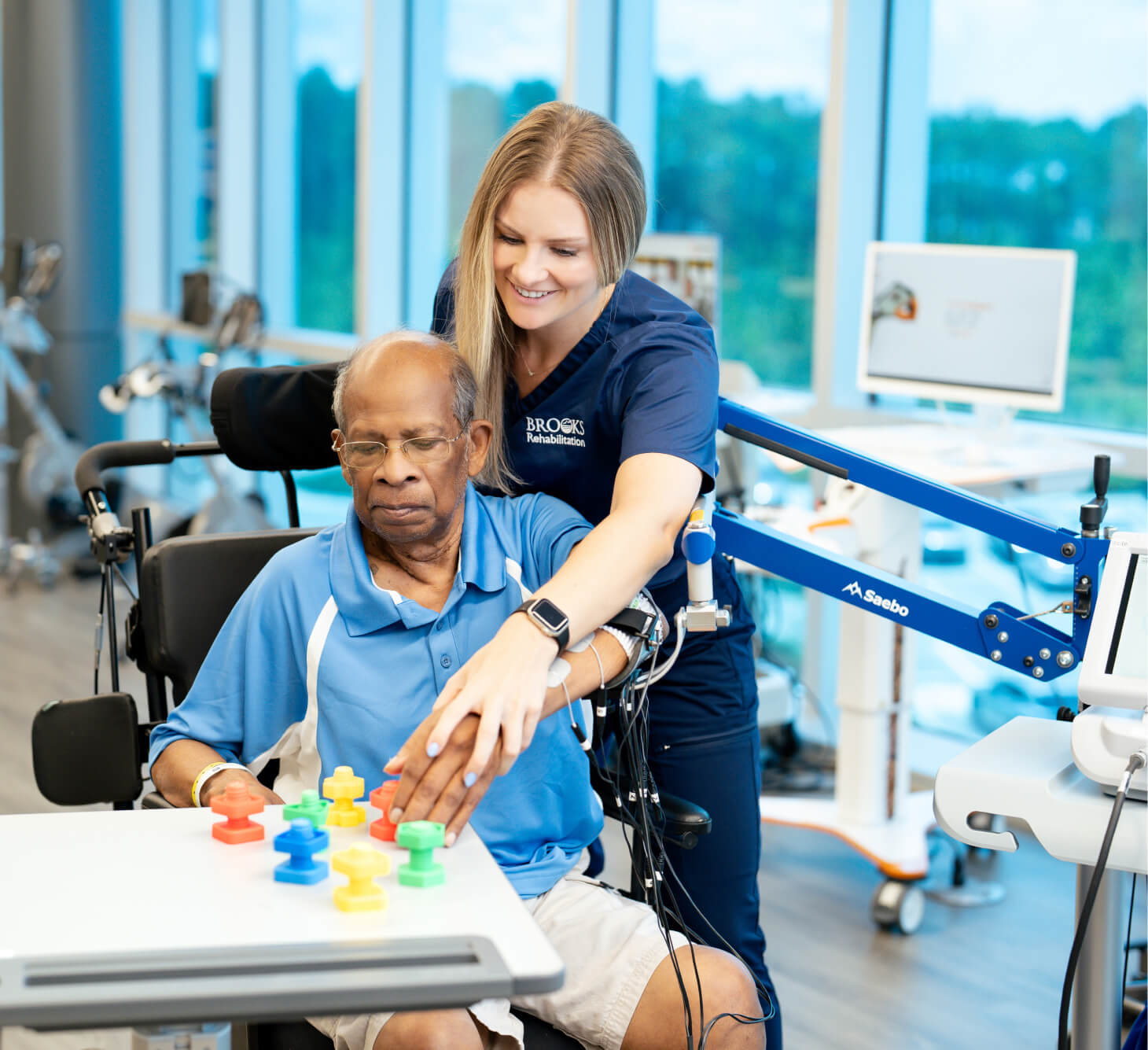
Once admitted to Brooks, our goal is to help you transition from feeling like a patient to an independent person. We’ve learned from experience that intense rehabilitation gets patients with a hip fracture mobilized faster. This is why, each weekday, you will receive three or more hours of personally supervised therapy, including:

Physical therapy
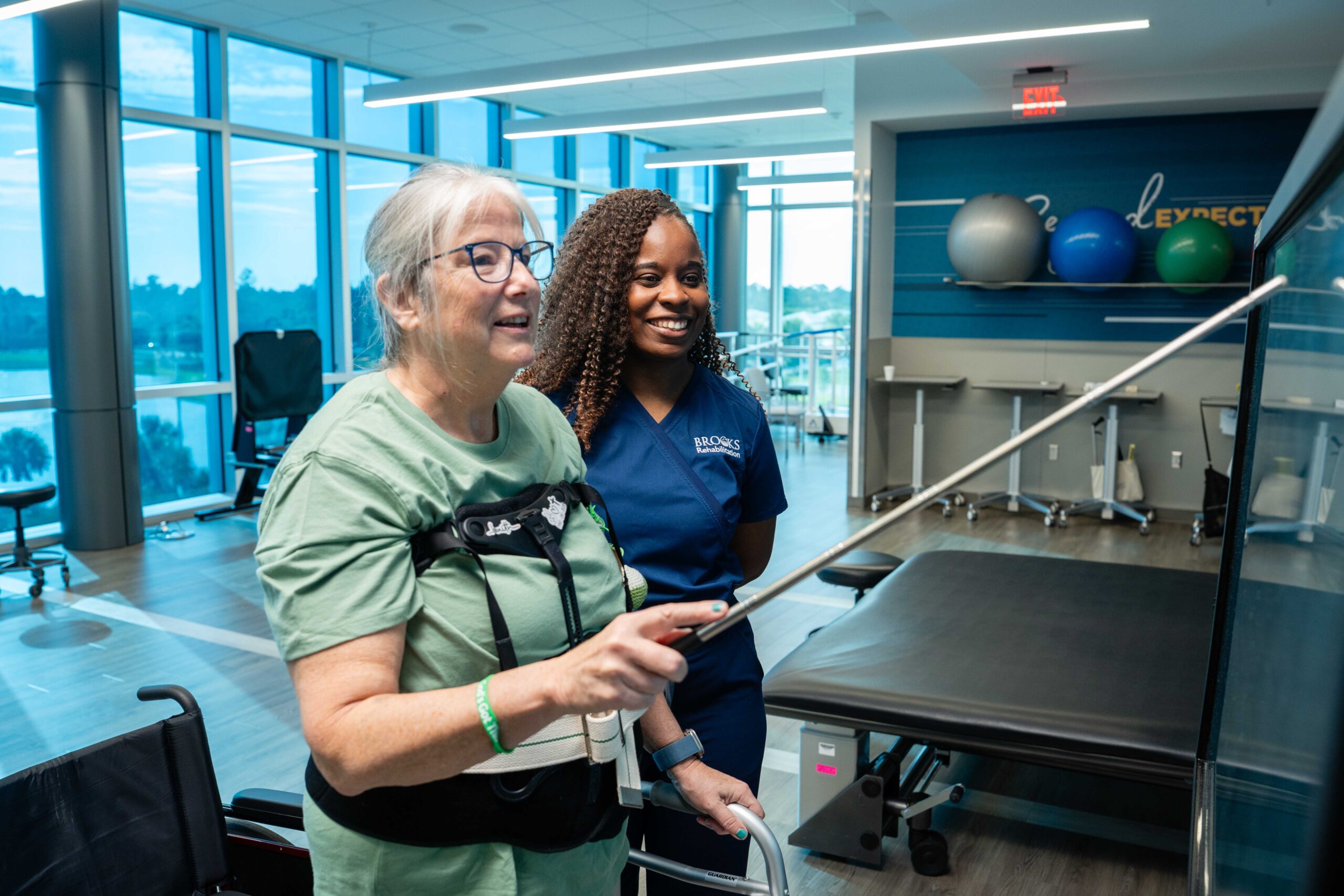
Your physical therapist (PT) will focus on getting you back on your feet even though you feel unsteady and it hurts to move initially. You’ll learn to do exercises that increase the strength and flexibility of your hip muscles. In the beginning, you may need to use a wheelchair to get around. As you get stronger and the pain decreases, your PT will show you how to walk with crutches, a walker or a cane—how to go up and down stairs and get in and out of a car.

Occupational therapy
Your occupational therapist (OT) will teach you how to dress and bathe and can recommend modifications for your home to help you function more independently. Minor changes can make a big difference. For example, some of your OT’s recommendations may include handrails around the tub, removal of scatter rugs and the substitution of a tall, high-backed chair instead of a low, soft easy chair.

Aquatic (pool) therapy
Aquatic therapy supports the body, reduces weight placed on your hip and provides resistance and assistance to movement. By exercising in our aquatic therapy pool, or using our AquaCiser™ underwater treadmill systems—which allow you to walk in a low impact environment—you can improve mobility, strength and function rapidly while you heal from your hip fracture. Aquatic therapy is most frequently incorporated into the outpatient regimen of treatments.

Read more about the range of therapies offered by Brooks.

The power of positive thinking

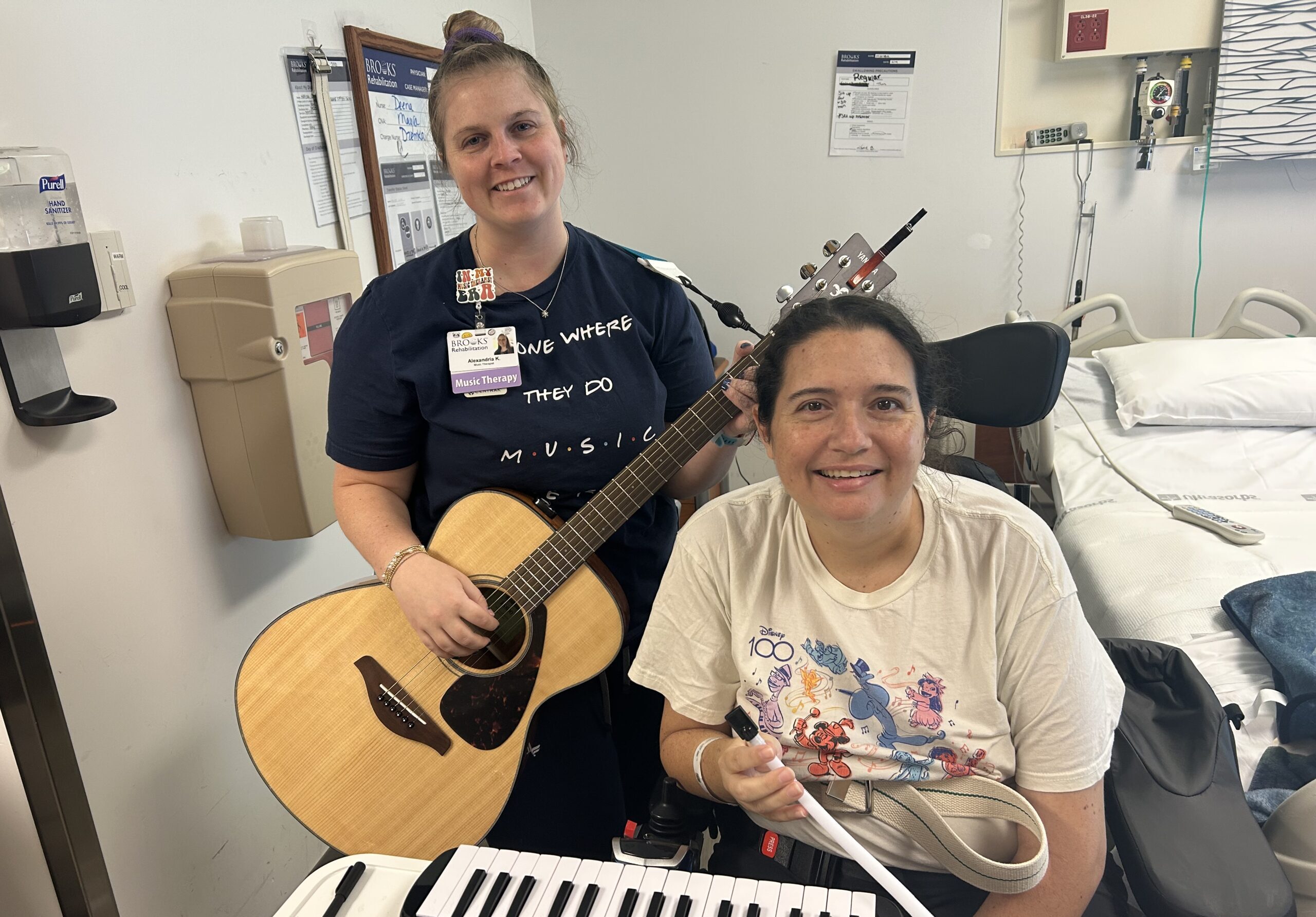
At Brooks, we are firm believers in the power of positive thinking. During hip fracture recovery, it is not uncommon to feel anxious, angry or depressed. Our highly qualified psychologists are available to counsel patients so they can gain the most benefit from rehabilitation. Counseling may include stress management, relaxation training and education—helping patients celebrate the small milestones of recovery, such as walking 10 steps further today than yesterday.

Recovery is all in the family

Support from your family or caregiver is vital to your recovery. Before you go home, your therapist meets with you and your caregiver to determine how you can best adjust to living outside of Brooks. Your therapist will recommend modifications in your home that will enhance your ability to function more independently. The therapist will also explain how and when you need the most assistance. And, if your caregiver needs extra help, representatives from your Brooks Rehabilitation team will visit your home to make adjustments prior to discharge.

Protect yourself against re-injury

You can guard against re-injury by reducing your risk of falls if you follow some simple guidelines. By simply keeping your home well lit and free of hazards that might cause you to trip and fall—such as area rugs and exposed electrical cords—you can decrease the likelihood of an accident. Eating a healthy diet that includes plenty of calcium and vitamin D will also benefit you by preventing future bone loss.